

Modular Kitchen Tiles: Design Ideas, Types, and Tips for Choosing the Right Ones
A modular kitchen is more than a place to cook; it is a carefully designed space where beauty meets everyday practicality. The right tiles can add character, complement the cabinetry, withstand daily wear, and simplify cleaning.
From backsplashes and countertours’ surroundings to floors and accent walls, modular kitchen tiles can transform ordinary surfaces into carefully designed visual elements. A well-chosen tile combination can visually open up a compact kitchen, add personality to a spacious one, and create a cohesive flow between the cabinetry and walls.
This guide explores ten fresh design directions, compares wall and floor applications, and shares practical tips for selecting tiles that balance appearance and performance.
Modern Kitchen Tile Designs for a Refined Look
Modern kitchens benefit from tile designs that combine visual character with practical performance. These ten ideas reinterpret colour, texture, pattern, scale, and material-inspired finishes for distinctive modular interiors.
1. Soft-Tone Linear Tiles for Visual Continuity
Long, slim tiles can create a sense of horizontal movement across a backsplash. Soft shades such as warm ivory, muted beige, pale grey, or dusty sage can complement contemporary cabinets without overwhelming them. A linear arrangement also works particularly well when the kitchen has long countertops because the repeated horizontal rhythm visually connects different work zones.
2. Stone Vein Tiles for Natural Sophistication
Stone-inspired surfaces can introduce the appearance of natural material without making the kitchen feel excessively traditional. Instead of using heavily contrasting patterns, choose subtle veins running through a light base. Pairing these tiles with handleless cabinets and simple hardware can create a refined setting where the backsplash becomes an elegant background rather than the dominant feature.
3. Geometric Mosaic Tiles for Creative Energy
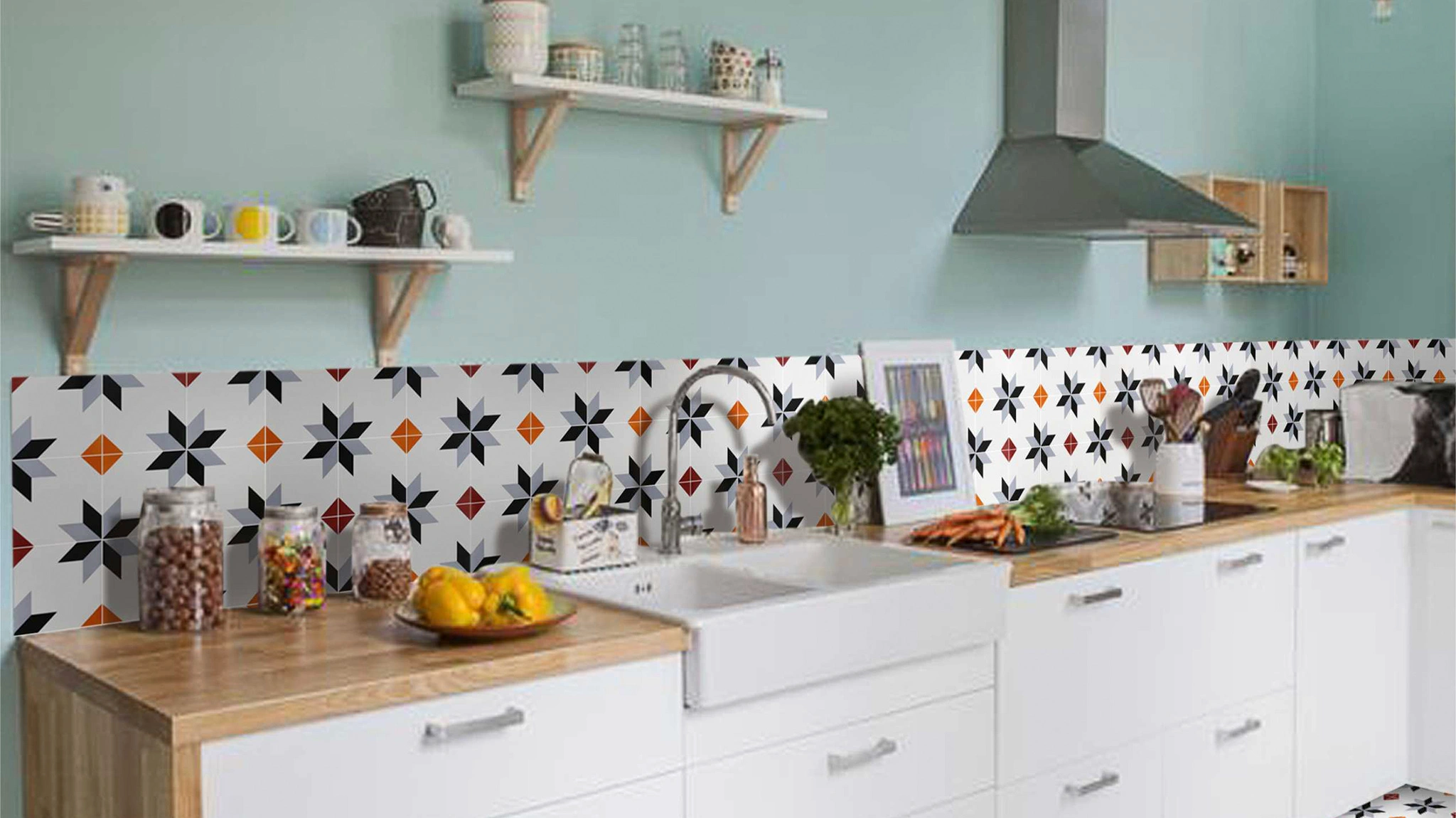
Small geometric patterns can give a modular kitchen a playful architectural quality. Hexagons, diamonds, interlocking shapes, and angular motifs can be used behind the hob or sink to create a focal zone. Keeping the surrounding cabinetry relatively simple allows the geometric surface to become a deliberate design statement.
4. Handmade-Look Surfaces for Warmth
Tiles inspired by handcrafted ceramics can soften the structured appearance of modular cabinetry. Slight variations in surface texture, tone, or edge character can make the backsplash appear more organic. Earthy colours, creamy whites, muted blues, and terracotta-inspired shades work particularly well when the kitchen needs warmth without losing its contemporary identity.
5. Terrazzo-Inspired Tiles for Playful Texture
Terrazzo-inspired designs bring multiple tones together through scattered chips or fragments. They can connect cabinet colours, flooring, hardware, and accessories within one visual surface. A restrained terrazzo pattern is particularly effective when the kitchen contains several neutral elements that need a subtle touch of personality.
6. Deep-Hued Accent Tiles for Dramatic Contrast
Dark blue-green, charcoal, navy, or deep brown tiles can create a dramatic backsplash when paired with lighter cabinets. Instead of covering every wall with a strong colour, use a darker surface selectively around the cooking zone. Select Ajrakh Teal, from the Cascade V2.0 Squares collection, which can bring a rich teal character to a modular kitchen while adding depth and visual interest to the backsplash.
7. Ribbed Texture Tiles for Subtle Dimension
Three-dimensional surfaces can introduce shadows and highlights without relying on strong colours. Ribbed, fluted, or softly raised tile patterns can make a backsplash more tactile and interesting as natural or artificial light changes throughout the day. These designs work particularly well in minimalist kitchens where texture replaces elaborate ornamentation.
8. Micro-Pattern Tiles for a Quiet Focal Point
Tiny repeated motifs can provide visual detail without creating a busy appearance. Small floral, abstract, or line-based patterns can be used across a backsplash while maintaining a controlled colour palette. This makes them suitable for kitchens where cabinets, countertops, or appliances already contribute strong visual elements.
9. Large-Format Tiles for Seamless Modernity
Large-format tiles reduce the number of visible joints and can make surfaces appear more continuous. These tiles are especially useful in contemporary kitchens where clean lines and uninterrupted visual planes are central to the design. Marble-inspired, concrete-inspired, or neutral stone effects can create an understated backdrop for modern cabinetry.
10. Contrast-Frame Tiles for Architectural Definition
A creative way to use tiles is to frame a particular area rather than treating the entire backsplash identically. A contrasting border can define the cooking zone, open shelf, niche, or sink area. Combining a plain central field with a decorative frame can give the kitchen a custom-designed appearance without excessive visual complexity. For a more distinctive modular kitchen, explore the Alta Mix option that can bring an artistic, contrasting touch to framed backsplash designs.
Matching Wall Surfaces with Practical Kitchen Flooring
Once a backsplash design has been selected, the next decision is understanding how wall and floor surfaces should work together. Kitchen dado tiles generally serve a protective and decorative role around areas exposed to splashes, vapour, and food preparation, making easy maintenance and suitable surface characteristics important. Their colour and pattern can either complement cabinetry or create a deliberate focal point, depending on the overall interior scheme.
Flooring requires a different approach because it experiences regular foot traffic, movement, dropped objects, and cleaning. Kitchen floor tiles should therefore be selected with durability, slip considerations, maintenance, and the overall layout in mind. While the wall and floor do not need to match exactly, using related tones or finishes can create visual continuity throughout the kitchen.
| Feature | Dado Tiles | Floor Tiles |
| Primary role | Wall protection and decoration | Walking and working surface |
| Main design focus | Pattern, colour, texture | Durability and coordinated appearance |
| Common location | Backsplash and cooking areas | Entire kitchen floor |
| Maintenance priority | Easy cleaning | Resistance to regular wear and cleaning |
| Visual impact | Creates a focal wall | Establishes the room’s foundation |
| Selection approach | Coordinate with cabinets and counters. | Coordinate with cabinetry and room proportions. |
The strongest interiors usually create a relationship between both surfaces rather than selecting them independently. A patterned backsplash can work with a quiet floor, while a decorative floor can be balanced with understated wall tiles.
Creating a Cohesive Palette across Every Surface
After deciding where different tiles will be used, colour and proportion become the next design considerations. A kitchen can contain cabinetry, countertops, appliances, handles, lighting, walls, and flooring, so introducing too many competing patterns may make the space appear visually fragmented.
One effective strategy is to establish a dominant colour, a supporting tone, and a smaller accent shade. For example, warm white cabinetry can be paired with beige stone-effect walls and a muted green accent. Another approach is to use the same colour family across different tile finishes so that texture creates variation instead of contrasting colours.
Scale matters a lot in this aspect. Small tiles can create intricate visual rhythm, whereas larger formats can make a compact kitchen appear less interrupted. Vertical arrangements can emphasise height, while horizontal layouts can visually extend a wall.
Lighting should also influence the selection. Glossy surfaces can reflect more light and make certain areas feel brighter, while matt and textured finishes create a softer appearance. Viewing physical samples under the kitchen’s actual lighting conditions can help prevent unexpected differences between showroom impressions and the finished space.
Practical Tips for Selecting the Kitchen Tiles
Finding the best kitchen tile is not simply about choosing the most attractive pattern. The right selection should respond to where the tile will be installed, how frequently the kitchen is used, the cleaning routine, lighting conditions, existing materials, and the desired visual character.
Start by identifying the surface. Wall applications can provide greater freedom for experimenting with pattern and texture, while flooring needs to satisfy practical requirements associated with regular movement and maintenance. Consider the relationship between tile size and kitchen dimensions as well. Large formats can support a clean contemporary aesthetic, while smaller formats can introduce detail into otherwise simple spaces.
Colour should be assessed alongside cabinets and countertops rather than in isolation. A tile that looks neutral on its own may appear warmer or cooler beside particular cabinetry. Similarly, strong patterns should be tested against the countertop and backsplash area to ensure that the overall composition remains balanced.
Maintenance is another important aspect. Cooking areas can experience oil splashes, food particles, moisture, and frequent cleaning, so surfaces should be chosen with everyday use in mind. Grout colour and joint arrangement can also influence the appearance and maintenance requirements of tiled surfaces.
Wrapping Up
Modular kitchen tiles can do far more than protect walls and floors. These tiles can establish visual rhythm, introduce texture, create focal points, connect different materials, and give a functional kitchen a distinctive identity. From stone-inspired surfaces and geometric mosaics to large-format designs and tactile textures, the possibilities allow you to build a kitchen around both practical requirements and personal style.
The most successful approach is to consider the complete space rather than selecting individual tiles alone. When backsplash designs, flooring, cabinets, countertops, lighting, and accessories are visually connected, the result feels more considered and cohesive. For innovative tile surfaces that combine contemporary design with creative finishes, explore the collections and design possibilities offered by Ceramic Fashion Studio.
Need Help Choosing the Perfect Tiles?
Related Blogs
Kitchen Tile Trends 2025: The Ultimate Design Guide
Kitchen design is changing fast in 2025. Modern kitchen wall tiles design are no longer just functio

Best Mosaic Tiles Crafted for Sophisticated and Stylish Interiors
Interior spaces tell stories through surfaces, textures, and thoughtful details. Walls and floors sh

How to Pair Plain Tiles with Pattern Tiles for Balanced Bathroom Walls
Bathrooms aren’t just for getting ready anymore; they’re like little style getaways. A cool desi
Leave a Reply